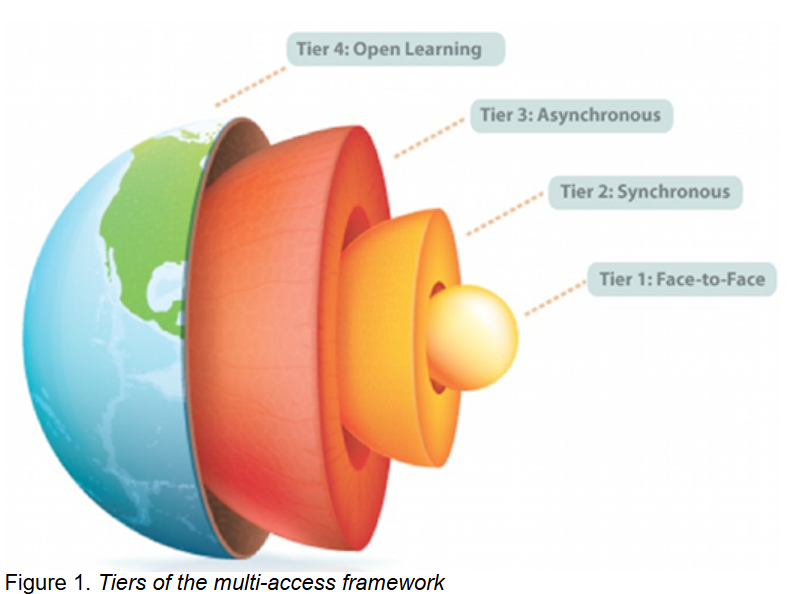
One idea that stood out to me was the concept of learner choice and flexibility. Irvine’s discussion of multi-access learning argues that students should have more control over how they access their learning rather than having institutions decide for them. This really opened my eyes because as a university student, I know that not everyone has the same schedule, responsibilities, or learning preferences. Some students work, care for family members, live far from campus, or simply learn better in different ways/environments. Providing multiple ways to access learning can make education more accessible and inclusive.
I also found the article on digital literacy interesting. Before reading it I thought digital literacy was just knowing how to use technology. In the article it also says digital literacy includes critical thinking, communication, collaboration, creativity, and digital citizenship. This made me think about how important these skills are today, especially with the increasing use of social media and AI. With the increasing use of AI in education and everyday life, digital literacy has become even more important because learners need to be able to critically evaluate information and use digital tools responsibly. Being digitally literate is not just about using technology but about knowing how to evaluate information, communicate responsibly, and make informed decisions online.
Another reading that stood out to me was the article on the Five R’s for Indigenizing Online Learning. At first I just assumed that online learning might make it more difficult to build meaningful relationships because people are not physically together. This article shows otherwise. It highlights how strong relationships and communities can still be developed in online environments when courses are designed for it. The five rs come into play here because in order to design online courses to build relationships they need to be designed around respect, relevance, reciprocity, responsibility, and relationships. This challenged my thinking and reminded me that technology itself does not determine the quality of learning. Instead, it is how learning experiences are designed and how people interact with one another that matters most.
This week helped me see that successful online learning is about much more than just technology. It needs thoughtful course design, flexibility, accessibility, strong relationships, and the development of digital literacy skills. As online learning continues to become more popular in education I think these ideas will become more important for both educators and learners.
Leave a Reply
You must be logged in to post a comment.